
Sunday, October 22, 2017

Mosiah 18:13-14 - Baptism of Helam
“13 And when he had said these words, the Spirit of
the Lord was upon him, and he said: Helam, I baptize thee,
having authority from the Almighty God, as a testimony that ye have
entered into a covenant to serve him until you are dead as to the
mortal body; and may the Spirit of the Lord be poured out upon you; and may he
grant unto you eternal life, through the redemption of Christ, whom he has
prepared from the foundation of the world.
14 And after Alma had said these words, both Alma and Helam were buried in
the water; and they arose and came forth out of the water rejoicing, being
filled with the Spirit.”
A
common theme found in the Book of Mormon is baptism and the importance of the
associated covenants. Chapter 18 of Mosiah is especially telling of the
purposes of baptism and the joy it brings to those who commit to “serve him
until [they] are dead as to the mortal body.” In these two verses, one can
better understand how exactly the mode of baptism occurs and what blessings
arise from such action. Helam, one of the converts of Alma, is the first to be baptized
in the Waters of Mormon. There are a couple notable statements that Alma says
that indicates what should be said in the baptismal ordinance. First, he states
his authority whereby he has power to baptize in the name of Christ. Second, it
is emphasized that Helam’s baptism is an outward sign of his inner covenant, or
promise, that he’ll remain faithful to God for the rest of his life. The Book
of Mormon in particular is very good at pointing out the covenant nature of
baptism.
This
scripture also shows the reader the blessings of baptism. Alma promises Helam
that the “Spirit of the Lord be poured out upon” him thus enabling him to be
closer to God and feel His love. This in turn also allows Helam to partake of
the blessing of eternal life in which he may return to God “through the
redemption of Christ.” Notice, that it is only through Christ that man can
return to Him, however, baptism serves as an ordinance showing our commitment to
follow Christ’s gospel. This entire chapter presents an intimate vignette into
the joys of baptism and how, when administered correctly, brings great
blessings into people’s lives.
Sunday, October 15, 2017
Mosiah 2:9 - How to Unfold the Mysteries of God
“9 And these are the words which he spake and caused to
be written, saying: My brethren, all ye that have assembled yourselves
together, you that can hear my words which I shall speak unto you this day; for
I have not commanded you to come up hither to trifle with the
words which I shall speak, but that you should hearken unto me, and
open your ears that ye may hear, and your hearts that ye may understand, and your minds that the mysteries of God may be
unfolded to your view.”
The
context of this scripture centers around King Benjamin and his final speech to
his people shortly before his death. His sermon is perhaps one of the greatest
found in the Book of Mormon. He focuses his thoughts on important topics likes
the Atonement, the role of Jesus Christ, and how to serve one another. While
emphasis is often placed on his actual words, one can also gain significant
insights when they study this verse as well.
In
this verse King Benjamin pleads with the people that they “hearken unto [him],
and open [their] ears.” It is interesting to note that the two verbs he chooses
were hearken and open. These two words denote actions that require a certain amount
of initiative from within the individual. Instead of passively hearing his
words, King Benjamin invites his people, and simultaneously people today, to actively
choose to engage in his sermon.
Additionally, he places
equal emphasis on opening their “hearts that [they] may understand” the
doctrine on a more sacred level. A common motif found throughout all scripture
is the heart and the role it plays in helping a person gain a testimony of the
gospel. To actively listen with the heart, the individual needs to invoke the
power of the Holy Ghost so that the truths may be interpreted spiritually. The
process whereby this occurs is not always easy, however, it proves to be the
most effective method for the conversion of the soul. Spiritual learning
transcends all physical forms and allows the individual to more deeply
understand God. Even later, King Benjamin states that by opening one’s ears and
heart, “the mysteries of God may be unfolded to [one’s] view.” These great
mysteries deal with the core doctrine of Christ and the personal application of
it to one’s self. As people strive to better understand the Plan of God for all
humanity by using the spirit, they will ultimately be able to move forward with
faith knowing how they personally fit within that Plan.
Sunday, October 8, 2017

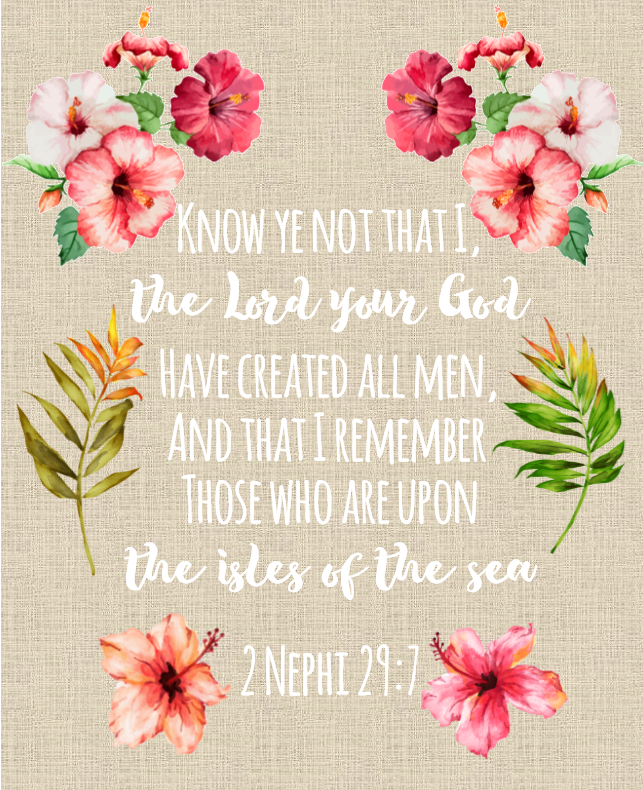
2 Nephi 29:11-12 - Unrevealed Scripture Yet to Come
“11 For I command all men, both in the east and in the
west, and in the north, and in the south, and in the islands of the sea, that
they shall write the words which I speak unto them; for out of
the books which shall be written I will judge the world,
every man according to their works, according to that which is written.
12 For behold, I shall speak unto
the Jews and they shall write it; and I shall also speak
unto the Nephites and they shall write it; and I shall also
speak unto the other tribes of the house of Israel, which I have led away, and
they shall write it; and I shall also speak unto all nations of the
earth and they shall write it.”
This
scripture has always been an intriguing rebuttal to those who argue that the
Bible is the only scripture one needs. As referenced many times within the
Bible itself, God is infinite and His works and glory cannot be fully
understood by man. Based upon that knowledge of the characteristics of God, one
cannot then arbitrarily limit His words in scripture. As is stated in verse 11,
God has commanded not just the Jews or even the Nephites to transcribe their spiritual
history and revelations, but all men everywhere. This leads one to understand that
there is even more scripture that has yet to be revealed.
One reads in 3 Nephi an
account of Christ Himself proclaiming that he has “other sheep, which are not
of this [the Americas] land, neither of the land of Jerusalem.” Later, it is
revealed that not only do these other sheep exist, but that Christ has “received
a commandment of the Father that [He] shall go unto them, and that they shall
hear [His] voice” showing once again God’s infinite love for all His children.
It can be inferred through this passage that other scriptures besides the Book
of Mormon and the Bible do exist and that someday all will be revealed. The
Book of Mormon is not only another testament of Jesus Christ, but also of God’s
presence in the lives of all people.
Sunday, October 1, 2017
2 Nephi 5:10,16,26-27 - Lived After the Manner of Happiness
“10 And we did observe to keep the judgments, and the statutes, and the
commandments of the Lord in all things, according to the law of Moses.
16 And I, Nephi, did build a temple; and I did
construct it after the manner of the temple of Solomon save it were
not built of so many precious things; for they were not to be found upon
the land, wherefore, it could not be built like unto Solomon’s temple. But the manner of
the construction was like unto the temple of Solomon; and the
workmanship thereof was exceedingly fine.
26 And it came to pass that I, Nephi,
did consecrate Jacob and Joseph, that they should
be priests and teachers over the land of my people.
27 And it came to pass that we lived after the
manner of happiness.”
In 2 Nephi chapter 5, the reader sees the split of
Lehi’s family and the formation of the famous dichotomy of the Nephites and the
Lamanities. Nephi gives us a brief history of some of the actions his people
took once they were separated. In the culmination of these righteous actions
Nephi then declares that his family “lived after the manner of happiness.” This
search for happiness is easily one of the most sought-after states of being
that humans desire. Upon a closer inspection of this chapter, we can see what
led Nephi and his people to become happy.
In verse 10, Nephi explains that his family “did
observe to keep the judgments and the statutes and the commandments of the Lord
in all things.” Thus, we see that if we follow God’s commands in all faucets of
our lives, we, too, can be happier and “prosper exceedingly” like Nephi’s
people did. Of course, one’s own dedication to obedience does not necessarily
negate all trials and hardships in life. However, we have been given the
promise that as we strive to become more like God and accept His plan for us,
everything ultimately will work out.
Another principle of happiness we observe is found
in verse 16 where Nephi “did build a temple…after the manner of the temple of
Solomon.” Even though they had been recently relocated to a new place, Nephi’s
people demonstrated their love of God by immediately building a new temple
where they can worship. This shows that temple worship allows one to find more
joy in their life. In connecting that to the modern day, the Saints today
should strive to include visits to the temple in their routines.
The last principle of happiness creation is found in
verse 26 where we see that Nephi “did consecrate Jacob and Joseph…[to] be priests
and teachers.” It is clear here that the Priesthood and the ordination of it is
important. Through the blessings of the Priesthood power, Nephi and his people
felt closer to God and made sacred covenants.
We see that through commandment keeping, temple building,
and Priesthood power, one can attain happiness in this life. As we strive to
follow Nephi and his example we, too, can develop a strong relationship with
God.
Sunday, September 24, 2017
Subscribe to:
Posts (Atom)